

On the surface, epoxy flooring seems straightforward. You have seen the video on YouTube — some guy rolls it on a Saturday afternoon, the garage is transformed overnight. What those videos fail to show is that three weeks later, the floor starts forming bubbles, or the coating peels away in sheets when the first car drips oil on it. There is a reason professional installers can charge what they charge. Let's look at what doing this right really involves dangers of epoxy flooring
Most people skip surface preparation entirely.
You cannot simply apply epoxy to unprepared concrete. Not "swept with a broom" clean. Cleaned both chemically and mechanically. Old coatings, grease, efflorescence, or curing compounds — and you'll be pulling sheets of epoxy off the floor within months.
The best approach is mechanical grinding. Grinding the surface with the right equipment gives epoxy something to grip. Acid etching is an alternative, though messier and harder to control. Ignore prep and the floor will fail within the year.
The silent killer here is moisture. Concrete is porous and allows moisture to move through it. Rising vapor through the slab will eventually lift any epoxy coating. Test for it. Place a piece of plastic on the floor overnight and see if condensation forms underneath. Moisture issues require either a moisture-tolerant epoxy or a dedicated vapor barrier primer.
Mixing is not a casual step.
Epoxy comes as a two-component system: resin and hardener. The ratio matters — 2:1 or 3:1 by volume — and eyeballing it is not an option. Skimp on the hardener and the floor may never fully cure. Over-catalyze it and the pot life drops dramatically. The whole batch can start setting before you finish the first coat.
Attach a paddle mixer to your drill. Mix thoroughly for at least two to three minutes. Make sure to scrape the bucket sides and base. Let the material stand for five to ten minutes as directed before rolling it out. Skipping the induction period undermines the chemistry of the product.
Weather conditions matter more than most people realize.
The environment plays a major role in how epoxy cures. Most products require ambient temperatures between 50°F and 85°F and a concrete surface above 55°F. Cold temperatures prevent proper curing. Humidity can cause a cloudy residue that ruins subsequent coats.
Interior conditions vary throughout the day. Conditions that are fine at noon might be problematic by morning when temperatures drop. Monitor the dew point temperature. Surface temperature must exceed the dew point by 5°F minimum.
Applying the epoxy correctly.
Cut in the edges with a brush first. Roll the open floor area with a 3/8" nap roller. Roll in manageable sections, maintaining a wet edge throughout. Be efficient but precise. Epoxy does not self-level and will not forgive roller marks in partially cured material.
A proper epoxy installation typically involves multiple coats. The base coat penetrates and bonds with the concrete. Subsequent coats build the protective film needed for durability. In broadcast flake systems, colored chips are scattered into the wet base coat, the base is fully flaked, scraped after drying, and then topped with one or two additional coats. Many systems use a polyaspartic or urethane topcoat for the final layer to handle UV exposure.
Polyaspartic vs. standard epoxy: a quick comparison.
Polyaspartics offer quick cure times, UV stability, and cold-weather flexibility. The tradeoff is a tight working window, especially on warm days. They are a favorite among pros. DIYers can find them difficult to manage. If you are a DIYer tackling your garage solo, a standard 100% solids epoxy will likely be more manageable.
Steps pros take that homeowners typically miss.
Professionals use mil gauges to check coating thickness. They apply product with squeegees for consistent coverage. They understand the difference between real epoxy and epoxy-labeled paint. These products are easier to apply and cheaper, but will not hold up under real use. They are more user-friendly, but sacrifice durability.
Professionals also address cracks before coating. Surface cracks are routed or filled with epoxy paste and feathered flat. Larger moving cracks are a concrete problem, not a coating problem.
Waiting after installation is where most people make a costly mistake.
Foot traffic within 24 hours is generally acceptable. For vehicles, the minimum wait is typically 72 hours. Push it and you will embed tire marks you cannot remove. The coating continues curing for a month. Avoid harsh solvents and heavy dragging across the surface during this period.
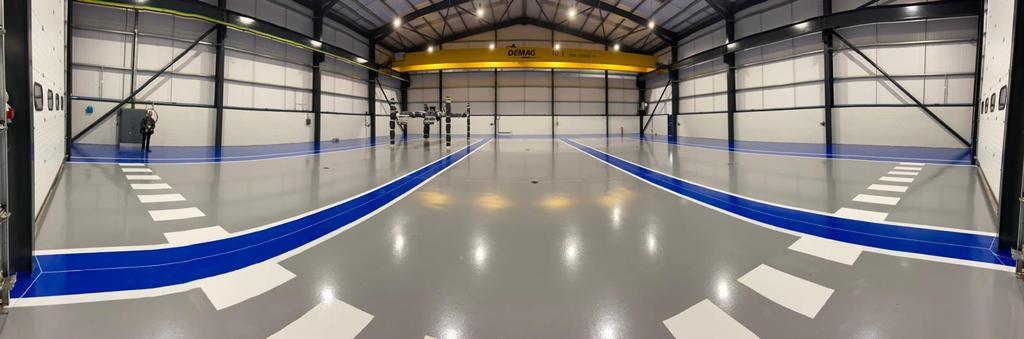
Done right, an epoxy floor is a long-term investment. You see it in commercial kitchens, airplane hangars, and high-end residential garages because the system genuinely works. It is not a difficult job, but it is an exact one. Rush the mix, ignore the weather, and skip the prep — and you will be starting over before the season changes.