

The property market in Thailand is like a durian fruit — initially baffling to outsiders, but once you push past that first impression, you're likely to understand the hype. Global investors and expats have been flocking to Phuket condos as an investment, and the reasons aren't hard to grasp prime phuket real estate.
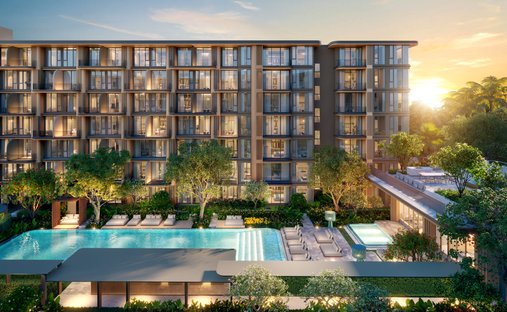
Phuket is far more than a tropical beach destination. It operates as a complete lifestyle ecosystem.
Over the past decade, the island has transformed dramatically. Simple fishing communities have evolved into world-class hospitals, international schools, five-star restaurants, and a real estate boom that would make Bangkok developers quietly envious. Condos here range from simple sea-view studios starting at 230,000 to 300,000 baht right up to penthouses well beyond 30 million baht. That range tells you everything: Phuket has something for virtually everyone.
The Location Question Is Bigger Than You'd Expect.
Talk to any agent on the island and they'll tell you the same thing: location defines the market. Patong is noisy, crowded, and soaked in neon light — perfect when you're chasing rental revenue from tourists on holiday around the clock. Bang Tao and Laguna sit at the opposite end of the spectrum — calmer, more genteel, home to long-stay families and retirees who opt for a sunset wine over a fluorescent bucket drink.
Rawai and Nai Harn are coming into their own. Digital nomads and remote workers have been steadily settling on the south side of the island, pushing up demand for mid-range condos near decent coffee and with solid internet. Prices remain lower there than the west coast — for the moment.
The Freehold vs. Leasehold Question — Read This Carefully.
This is where many foreign buyers hit a wall. Foreigners cannot purchase land in Thailand on a freehold basis, but under the Condominium Act, freehold condo ownership is available to foreigners as long as foreign ownership of any building does not exceed 49 percent of total floor area. If you're buying in a building where that quota is already full, leasehold is the only route available — typically 30 years, potentially extendable to 90.
Neither option is inherently bad. But knowing exactly what you're entering into before signing — that's non-negotiable.
Rental Income: The Figures That Always Come Up.
The island attracts millions of tourists between November and April. Gross rental yields on condos in high-demand areas can reach 5 to 8 percent annually, with beachside units sometimes doing even better. Certain developments come with guaranteed rental schemes — the developer handles the unit and guarantees a fixed return for a defined period.
Sounds appealing. And sometimes it genuinely is. The word "guaranteed" varies considerably depending on the paperwork. Read those documents. Then read them again.
The Purchase Process, Simplified.
Once you've found a condo and agreed on terms, you pay a reservation deposit (50,000–200,000 baht). A sale and purchase agreement is drawn up. Due diligence follows — verify the title deed (a Chanote), ensure the building's juristic person is functioning, and make sure utility accounts are clear. For freehold purchases, funds must be transferred from abroad (a requirement under Thai law for foreign freehold ownership), with the transfer finalised at the Land Office.
That's the simplified version. In reality, there are more steps — and the occasional surprise. Engaging a qualified Thai property attorney is a worthwhile investment — far better than relying on the developer's legal team.
New Development or Resale — Which Is Right for You?
New developments often come with attractive payment plans — perhaps 30 percent down with the balance in staged payments over two or three years. Useful for managing cash flow, but less appealing if the developer encounters delays. Some Phuket projects have experienced exactly that.
With resale, you get to see the real unit, assess the building's condition, and sometimes negotiate harder. No waiting, no construction risk. The trade-off is paying a slightly higher price per square meter than pre-launch new-build pricing.
The Forces Pushing Values Higher.
Values have been climbing on the back of infrastructure improvements. Phuket International Airport's ongoing expansion, continued road upgrades, and long-discussed light rail projects keep appearing in headlines. Whenever an infrastructure announcement lands, agents start fielding calls from investors who suddenly remember they always wanted to live by the ocean.
In past years, Chinese, Russian, and Scandinavian buyers led demand. Increased Russian buyer interest — particularly in areas like Rawai — became especially visible after 2022 as capital sought safer harbours. Buyer profiles evolve. But Phuket's core appeal has not dimmed: sunshine, growing infrastructure, accessible living costs, and a property market that keeps finding new ceilings.
The Conversation Nobody Wants to Have.
Maintenance fees. Juristic person fees. Common area charges. These vary enormously across developments. Premium beachfront developments can run 80–120 baht per square metre per month in fees. Budget developments may offer lower charges — but frequently with a matching drop in management standards. Include them in your real cost calculations. A 50 sqm unit at 100 baht per sqm — that's 60,000 baht annually before the electricity is even on.
Don't overlook sinking funds either. Good buildings maintain them. Those without them tend to look great for the first five years, then begin to deteriorate right around the time you want to sell.
Is Phuket Property Worth the Commitment?
That depends entirely on what you're after. Phuket condos represent a genuine opportunity — for those seeking a base in Southeast Asia or an income-producing investment. But this is a market that rewards research and punishes those who buy on the strength of a developer pitch alone.